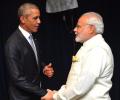
Prime Minister Narendra Modi and President Barack Obama on Monday decided to "further refine" the Indo-US strategic partnership while pushing ahead with cooperation in the areas of security, counter-terrorism, defence, economy and climate change.

Rahul Gandhi, Leader of Opposition, met Malaysian Prime Minister Anwar Ibrahim for a breakfast meeting in New Delhi to discuss India-Malaysia relations. The meeting, also attended by Priyanka Gandhi Vadra, followed earlier talks between PM Narendra Modi and Ibrahim on trade, semiconductors, infrastructure, and defence. Malaysia is a key partner for India within BRICS and ASEAN.

US Vice President JD Vance and Prime Minister Narendra Modi held a phone call to discuss expanding the India-US comprehensive global strategic partnership, focusing on trade, defence, energy security, emerging technologies, and critical minerals. The discussion comes amidst rising tensions in West Asia and recent regional realignments, with both leaders reaffirming their commitment to strengthening cooperation.

US Vice-President J D Vance's unexpected phone call to Prime Minister Narendra Modi on August 8 has ignited speculation about a potential diplomatic overture, possibly seeking India's support amidst the escalating US-Iran conflict and a shifting global power landscape, suggests Ambassador M K Bhadrakumar.

External Affairs Minister S Jaishankar has publicly acknowledged India's intensified diplomatic efforts to resolve the Ukraine conflict, engaging directly with both Kyiv and Moscow. India is focusing on critical issues like Black Sea shipping safety, grain exports, and energy supplies, moving beyond its previous advocacy role. Jaishankar also highlighted India's historical ties with Russia and discussed the evolving global geopolitical landscape, including the repositioning of the US and the rise of China.

India is hosting the BRICS summit, leveraging the platform to address global trade tensions and champion the developmental priorities of the Global South, including food, energy, and supply chain security. The summit, attended by leaders like President Xi Jinping and Vladimir Putin, will focus on resilience, innovation, cooperation, and sustainability, with India aiming to strengthen intra-BRICS collaboration and discuss global matters. The expanded BRICS grouping represents a significant portion of the world's population and GDP, making its discussions crucial for global economic stability.

NPCI International and Uzbekistan's NIPC have partnered to enable UPI payments across Uzbekistan, allowing Indian tourists, business travellers, and students to make instant merchant payments using the UZQR code. This agreement, approved by RBI and CBU, integrates UPI with Uzbekistan's national payment system, HUMO, facilitating direct P2M payments from Indian bank accounts and reducing reliance on foreign exchange or international cards.

The BRICS summit in New Delhi brings together leaders from major emerging economies to address global challenges like trade disputes, geopolitical upheavals, and the economic impact of conflicts in Ukraine and West Asia. India, as chair, aims to position BRICS as an economic growth engine, focusing on the Global South's food, energy, and supply chain security. The summit also highlights the grouping's expansion and its growing influence in global governance.

BRICS nations have successfully reached a consensus on a joint statement following extensive negotiations, with India playing a crucial role in bridging differences, particularly among West Asian members like Iran, Saudi Arabia, and the UAE, despite regional conflicts and geopolitical tensions.
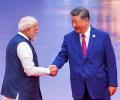
India's dual pursuit of a robust strategic partnership with Washington and a pragmatic, tension-management policy with Beijing represents the essence of modern multi-alignment. By embracing economic pragmatism, learning to compartmentalize political differences, and engaging in continuous dialogue, India can secure its borders, grow its economy, and contribute to a stable, multipolar Asian century, points out Ambassador Rajasekhar.

Prime Minister Narendra Modi was accorded a grand welcome on his arrival in Jakarta on Monday, with Indonesian Air Force fighter jets escorting the PM's aircraft upon entering Indonesian airspace, marking a ceremonial welcome.

Russian President Vladimir Putin has proposed a new investment platform, based on the New Development Bank (NDB), to fund projects in trade, infrastructure, logistics, and technology across BRICS nations, emphasising that the grouping's expanding economic cooperation is not 'against anyone' but aims to advance members' national interests.
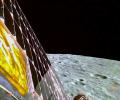
NASA has invited ISRO to join its ambitious Moon Base mission to establish a permanent lunar outpost near the Moon's South Pole, aiming for scientific discoveries and future deep space exploration. This invitation follows discussions at the Civil Space Joint Working Group meeting in Bengaluru, where both nations also advanced cooperation under the Artemis Accords and the TRUST initiative.

Notwithstanding the economic complementarities and the host of agreements for deepening economic relation on a host of areas, both sides share common viewpoints on the foreign policy domain and seek common grounds to serve as a counterweight to China, notes Dr Rajaram Panda.

Russian President Vladimir Putin has arrived in India for a three-day visit to attend the BRICS summit and hold bilateral talks with Prime Minister Narendra Modi, focusing on expanding trade, investment, and energy cooperation amidst global geopolitical challenges.

India-US ties may be strained, but abandoning the relationship is not the answer; India must deal with Washington firmly without becoming either servile or hostile, asserts Ambassador T P Sreenivasan.

India has highlighted 13 key outcomes from the recent Shanghai Cooperation Organisation (SCO) summit, focusing on enhanced cooperation in security, counter-terrorism, and addressing transnational threats. These outcomes include the establishment of a Universal Centre for Countering Challenges and Threats to Security, a strong stance against state-sponsored terrorism, and agreements on narcotics control, climate change, and artificial intelligence, reinforcing India's engagement in the Eurasian region.

India and Australia have signed significant agreements covering civil nuclear energy, maritime security, and critical minerals, reinforcing their partnership's role in ensuring a peaceful Indo-Pacific. The pacts facilitate uranium supply from Australia to India and enhance cooperation in defence, cyber, and critical technologies.

Prime Minister Narendra Modi's visit to New Zealand culminated in the elevation of bilateral ties to a strategic partnership, with a focus on doubling trade and enhancing cooperation in sports and the Indo-Pacific region. Modi and his counterpart Christopher Luxon attended a sports showcase, acknowledging a century of sporting ties and discussing future collaborations, including India's preparations for the Commonwealth Games 2030. The visit also saw 18 concrete outcomes and 10 agreements signed, alongside discussions with business leaders.

Prime Minister Narendra Modi urged Russian President Vladimir Putin to move from 'endless war to the end of war' in Ukraine, emphasising that a peaceful resolution is humanity's shared priority.

Prime Minister Narendra Modi is scheduled to visit Israel for two days to discuss bilateral and regional issues, marking his second visit to the Jewish state and highlighting the growing strategic partnership between India and Israel.

Prime Minister Narendra Modi and Indonesian President Prabowo Subianto have significantly advanced the India-Indonesia Comprehensive Strategic Partnership, securing crucial agreements on defence, critical minerals, and maritime security, including BrahMos missile supply and Sabang port development.

India and Japan have signed a Memorandum of Arrangement on maritime security cooperation, committing to deepen defence ties and oppose unilateral actions that impede freedom of navigation in the Indo-Pacific, a move seen as directed at China's increasing military presence.
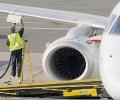
GMR Aero Technic has signed a license agreement with Honeywell Aerospace to provide maintenance, repair, and overhaul (MRO) services for LEAP engine line replaceable units (LRUs). This partnership will enhance MRO capabilities for Airbus A320neo and Boeing 737 MAX aircraft in India, leveraging Honeywell's technology and GMR's infrastructure to offer efficient and cost-effective solutions for regional airlines.

Prime Minister Narendra Modi has begun a six-day tour of the UAE, the Netherlands, Sweden, Norway and Italy to strengthen bilateral relations amid geopolitical challenges. The trip will focus on energy security, trade, and technological cooperation.

BJP MP Raghav Chadha addressed the 12th IPU Global Conference of Young Parliamentarians in Samarkand, Uzbekistan, highlighting India's digital transformation journey. He emphasised how technology is widening access and promoting inclusion, citing UPI's success, affordable data, and robust data protection laws. Chadha also discussed India's digital cooperation with Uzbekistan and the importance of digital rights, safety, and skill development for all citizens.

An Indian Army contingent, Navy warships INS Tarkash and INS Ikshak, and a naval band are participating in Seychelles' Golden Jubilee National Day celebrations. Prime Minister Narendra Modi is attending as the Guest of Honour, underscoring the strong strategic partnership and defence cooperation between India and the archipelago nation.

Prime Minister Narendra Modi met his Italian counterpart Giorgia Meloni in Rome to discuss ways to strengthen the India-Italy friendship, marking the final leg of his five-nation tour.

Donald Trump announced a landmark agreement with Venezuela, claiming it to be the 'biggest oil deal in world history'. The deal reportedly grants the US majority control over more than 65 billion barrels of Venezuela's proven crude oil reserves, aiming to double American oil reserves and lower domestic gasoline prices.

US Ambassador to India Sergio Gor revealed that President Donald Trump views Prime Minister Narendra Modi as 'a friend' and is deeply committed to enhancing cooperation with New Delhi, highlighting their personal equation as a crucial factor in advancing bilateral ties.

Prime Minister Narendra Modi addressed the Indonesian parliament, emphasising India's commitment to development over expansionism and advocating for a free, open, and inclusive Indo-Pacific. He highlighted the strong historical ties between India and Indonesia, calling for enhanced cooperation in various sectors, including defence, technology, and counter-terrorism, amidst growing concerns over regional security.

The visit was expected to project Assam as the gateway to Southeast Asia and reinforce the state's emergence as a preferred investment destination.
India-France synergy is poised to open vistas of collaboration between the two countries, notes Rup Narayan Das.

Prime Minister Narendra Modi's visit to Italy concluded with the elevation of India-Italy relations to a Special Strategic Partnership, focusing on enhanced cooperation across various sectors.

Vietnam is an emerging regional power and a closer relationship with Hanoi is closely aligned with Prime Minister Narendra Modi's Act East Policy, points out Dr Rajaram Panda.

Hindustan Aeronautics Limited (HAL) and Safran Aircraft Engines have signed a long-term agreement for the production and supply of turbine ring forgings for the CFM LEAP engine programme. This multi-year contract, signed at the Farnborough International Airshow, will see HAL manufacture critical superalloy components at its Bengaluru facility, enhancing India's capabilities in advanced aerospace manufacturing and expanding its presence in the international civil aerospace market.

The ministry of external affairs on Friday dismissed as 'fake news' reports alleging that India had requested Israel to sign a defence pact in response to the newly formed Pakistan-Saudi Arabia-Turkey security framework.

India has joined the US-led 'Pax Silica' alliance, aimed at building a resilient supply chain for critical minerals and artificial intelligence, marking a significant step in strengthening bilateral ties and fostering economic security.

The Japanese PM's visit to Assam comes amid festering uneasiness in Tokyo about Beijing's assertiveness in the Indo-Pacific region.

A readout by the US said the agreement marked a milestone in the strategic partnership between the two nations to ensure that the foundational elements required for advanced technology and energy are available within trusted networks.
